Filter by:
Law and Plastics Taxonomy
-
Compliance and enforcement
(1)
- Emissions and releases (24)
- Impacts (7)
- Littering (8)
-
Marine litter
(9)
- Institutional arrangements (6)
-
Coordination
(4)
- Financing (1)
- Integration and mainstreaming (4)
- Public participation (5)
- La gestion des déchets (23)
-
Dumping
(4)
- Fishing gear (2)
- Waste (22)
- Domestic waste (2)
- Dumpsites (1)
-
Hazardous waste
(3)
- Waste collection (3)
- Waste disposal (2)
- Waste management facilities (1)
- Waste management plans (1)
- Waste minimization (8)
- Waste prevention (1)
- Waste treatment and processing (17)
- Managed landfill (1)
- Polymer degradation (1)
-
Resource recovery
(16)
- Plastic materials and production (20)
-
Microplastics
(3)
-
Primary microplastics
(2)
- Plastic polymers (7)
-
Synthetic polymers
(7)
- Polyethylene terephthalate (4)
-
Polyolefins
(1)
- Polystyrene (5)
- Plastics (19)
- Policy approaches (15)
- Circular economy (9)
-
Economic instruments
(5)
- Fines (2)
-
Taxes
(3)
- Extended Producer Responsibility (3)
- Life-cycle approach (2)
- Product bans (2)
- Problematic and avoidable plastic products (16)
-
Short-lived plastic products
(16)
-
Plastic packaging
(12)
- Plastic carrier bags (11)
-
Plastic containers
(2)
- Single-use plastic products (14)
- Product design, composition and performance (3)
-
Product design and performance
(3)
Showing 41 - 50 of 73 resultsCase study | 2018Strategy on Zero Plastic Waste (PN 1583)'Recognising the important role of plastics in our economy, this strategy lays out a path to treat this material as an ever-valuable resource and defines areas of work that will contribute to reaching the ambitious plastic waste reduction targets laid out in the Ocean Plastics Charter. The Strategy and its implementation will be an important contribution to achieving both a circular and low-carbon...CountryCanada
 Case study | 2018Moana Taka PartnershipPacific Island Countries and Territories (PICTs) have amassed a huge amount of waste, much of it hazardous, including large amount of plastics. These are wastes are washed into the surrounding seas when tropical cyclones and floods occur. Marine litter continually enters the region on ocean currents from stormwater, fishing vessels, cruise ships and container ships. Considering the challenges...CountryFijiKiribatiMarshall IslandsPapua New GuineaSamoaSolomon IslandsTongaVanuatu
 Case study | 2018Australasian Recycling Labelling ProgramThe Australasian Recycling Labelling Program is an on-pack labelling scheme to help consumers to recycle correctly and to support brand owners and packaging manufacturers to design packaging that is recyclable in Australia and New Zealand. Source: United Nations Environment Programme (2023). Turning off the Tap: How the world can end plastic pollution and create a circular economy. Topic Sheet...CountryAustralia
 Case study | 2018Waste Management at Bucuti and Tara Beach Resort, ArubaBucuti and Tara Beach Resort is the Caribbean’s first and only certified carbon-neutral hotel. Located on the small island of Aruba, today, the property is pursuing carbon negative status. Since its inception, Bucuti and Tara Beach Resort (Bucuti & Tara) has had a high standard and placed the utmost importance on sustainability and care for the environment. This shows true until today; most...
 Case study | 2017Implementation Plan for Prohibiting the Entry of Foreign Garbage and Advancing the Reform of the Solid Waste Import Administration System (No. 70 [2017], General Office of the State Council)This Plan is developed according to the decisions and arrangements of the CPC Central Committee and the State Council as to the advancement of the building of ecological civilization and the reform of the ecological civilization system, in order to comprehensively forbid the entry of foreign garbage into the country, advance the reform of the solid waste import administration system, promote the...CountryChina
 Case study | 2017Waste Management Contribution AgreementOn 27 June 2012 the Ministry of Infrastructure and Water Management (at that time the Ministry of Infrastructure and the Environment), the Association of Netherlands Municipalities (VNG) and the Packaging Industry signed the Packaging Agreement (Raamovereenkomst verpakkingen) 2013-2022 which states, amongst other things, that companies must recycle more packaging material and make the entire...CountryNetherlands
 Case study | 2017Statement on Clarifications on Exemptions and Application for Clearance under the Plastic Ban Gazette NoticeA statement regarding the interpretation of Kenya's Plastic Ban (Gazette 2356), including exemptions.CountryKenya
 Case study | 2017Operation National Sword - WTO regular notificationBy the end of 2017, China will forbid the import of 4 classes, 24 kinds of solid wastes, including plastics waste from living sources, vanadium slag, unsorted waste paper and waste textile materials.CountryChina
 Case study | 2017Maritime Intervention BrigadeASSO-MER created BIM (Maritime Intervention Brigade) in 2017 who’s main objective is to collect underwater and coastal waste from all over Martinique in order to reduce their impact on the marine environment (including fishing gear abandoned or lost at sea).
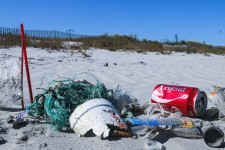 Case study | 2017Plastic Free St. KittsSince 2017, the St. Kitts Sustainable Destination Council together with the St. Kitts Ministry of Tourism, has championed a movement for a “Plastic Free St. Kitts.” Through various community engagement activities, the island-wide initiative combats plastic pollution and marine debris by raising awareness and empowering residents and businesses to reduce their consumption of single-use products. By...CountrySaint Kitts and Nevis
- Single-use plastic products (14)
-
Plastic packaging
(12)
- Polystyrene (5)
- Plastic polymers (7)
-
Primary microplastics
(2)
- Plastic materials and production (20)
- Financing (1)
- Institutional arrangements (6)
- Emissions and releases (24)