Filter by:
Law and Plastics Taxonomy
-
Compliance and enforcement
(1)
- Emissions and releases (24)
- Impacts (7)
- Littering (8)
-
Marine litter
(9)
- Institutional arrangements (6)
-
Coordination
(4)
- Financing (1)
- Integration and mainstreaming (4)
- Public participation (5)
- La gestion des déchets (23)
-
Dumping
(4)
- Fishing gear (2)
- Waste (22)
- Domestic waste (2)
- Dumpsites (1)
-
Hazardous waste
(3)
- Waste collection (3)
- Waste disposal (2)
- Waste management facilities (1)
- Waste management plans (1)
- Waste minimization (8)
- Waste prevention (1)
- Waste treatment and processing (17)
- Managed landfill (1)
- Polymer degradation (1)
-
Resource recovery
(16)
- Plastic materials and production (20)
-
Microplastics
(3)
-
Primary microplastics
(2)
- Plastic polymers (7)
-
Synthetic polymers
(7)
- Polyethylene terephthalate (4)
-
Polyolefins
(1)
- Polystyrene (5)
- Plastics (19)
- Policy approaches (15)
- Circular economy (9)
-
Economic instruments
(5)
- Fines (2)
-
Taxes
(3)
- Extended Producer Responsibility (3)
- Life-cycle approach (2)
- Product bans (2)
- Problematic and avoidable plastic products (16)
-
Short-lived plastic products
(16)
-
Plastic packaging
(12)
- Plastic carrier bags (11)
-
Plastic containers
(2)
- Single-use plastic products (14)
- Product design, composition and performance (3)
-
Product design and performance
(3)
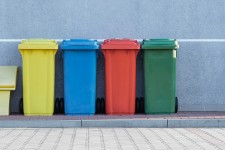
Showing 61 - 70 of 73 resultsCase study | 2008How2RecycleThe How2Recycle scheme was created to provide consistent and transparent on-package recycling information to consumers in North America through clear, consistent and concise labelling. Source: United Nations Environment Programme (2023). Turning off the Tap: How the world can end plastic pollution and create a circular economy. Topic Sheet: Design Guidelines for Circularity. Nairobi.CountryCanadaUnited States of America
 Case study | 2006Policy on Green ProcurementThe federal government is a significant purchaser in Canada. As such, its activities impact the national economy and can influence both the price and the availability of goods and services, including construction services, in the marketplace. Through the increased promotion of environmental sustainability, and by integrating environmental considerations in its procurement process, the federal...CountryCanada
 Case study | 2005Acuerdo Nº 111/05 - Política nacional para el manejo integral de los residuos y desechos sólidosThis Agreement approves the National Policy for the comprehensive management of waste and solid waste, which establishes the obligation to promote economic and technological development that prevents environmental pollution and maintains ecological balance. NB repealed by Política Nacional para la Gestión Integral de Residuos y Desechos Sólidos. on 01 Jan 2015CountryGuatemala
 Case study | 2003Notification of the Ministry of Environment and Forests: Matheran and surrounding region as an Eco-sensitive ZoneThe Ministry of Environment and Forests notifies Matheran and surrounding region as an Eco-sensitive Zone and imposes restrictions on industries, operations, processes and other developmental activities in the region which have detrimental effect on the environment. A Zonal Master Plan for the Eco-sensitive Zone shall be prepared by the State Government and shall provide for restoration of denuded...CountryIndia
 Case study | 2001Waigani Convention - South PacificThe Secretariat of the Pacific Regional Environmental Programme (SPREP) is the Pacific Regional Centre for the Joint Implementation of the Basel and Waigani Conventions. The objective of the Waigani Convention, adopted in 2001, is to reduce and eliminate transboundary movements of hazardous and radioactive wastes, minimize the production of hazardous and toxic wastes in the Pacific region, and...
 Case study | 1999Small and Medium Enterprises Equity Investment Scheme (SMEEIS)The Small and Medium Enterprises Equity Investment scheme is a voluntary initiative of the Bankers’ Committee approved at its 246th Meeting held on 21st December, 1999. The initiative was in response to the Federal Government’s concerns and policy measures for the promotion of Small and Medium Enterprises (SMEs) as vehicles for rapid industrialisation, sustainable economic development, poverty...CountryNigeria
 Case study | 1997National Safai Karamcharis Finance & Development Corporation (NSKFDC) Lending PolicyGovernments and financing institutions would design and operationalize landing schemes accessible to waste pickers and other more vulnerable actors in the plastics value chain (e.g. small businesses). Different from micro-financing, for instance, micro-credit lines would guarantee low interest rates, and have minimal bureaucratic hurdles for users (e.g. simple application process and minimal...CountryIndia
 Case study | 1975Stree Mukti SanghatanaSince 1975, Mumbai-based Stree Mukti Sanghatana has helped thousands of women improve their lives and escape poverty. Its concern for a gender-just world has also coincided with a concern for the environment.CountryIndia
 Case studyNavarra region SUP ban, reusable targets for HORECA sectorSince 2018, a regional law in Navarra requires businesses in the hotel, retail and catering (HORECA) sector to serve 80% of beer, 70% of soft drinks and 40% of water in reusable containers, by 2028. By the same deadline, 15% of beverage containers sold in shops must be reusable. Source: Rethink Plastic Alliance (2022). Single Use Plastics Directive Implementation Assessment Report.
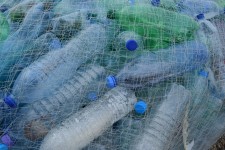 Case studyRegional Action Plan for Marine Litter (RAPMaLi) for the Wider Caribbean RegionThe Regional Action Plan for Marine Litter (RAPMaLi) for the Wider Caribbean Region was originally developed in 2007 to promote problem solving at the national and local levels, recognizing that unique regional characteristics should inform innovative solutions to the problem of marine litter. The RAPMaLi action plan has since been implemented through selected pilot projects in Guyana, Barbados...CountryBarbadosGuyanaSaint Lucia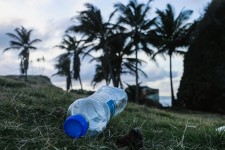
- Single-use plastic products (14)
-
Plastic packaging
(12)
- Polystyrene (5)
- Plastic polymers (7)
-
Primary microplastics
(2)
- Plastic materials and production (20)
- Financing (1)
- Institutional arrangements (6)
- Emissions and releases (24)