Filter by:
Law and Plastics Taxonomy
-
Compliance and enforcement
(1)
- Emissions and releases (24)
- Impacts (7)
- Littering (8)
-
Marine litter
(9)
- Institutional arrangements (6)
-
Coordination
(4)
- Financing (1)
- Integration and mainstreaming (4)
- Public participation (5)
- La gestion des déchets (23)
-
Dumping
(4)
- Fishing gear (2)
- Waste (22)
- Domestic waste (2)
- Dumpsites (1)
-
Hazardous waste
(3)
- Waste collection (3)
- Waste disposal (2)
- Waste management facilities (1)
- Waste management plans (1)
- Waste minimization (8)
- Waste prevention (1)
- Waste treatment and processing (17)
- Managed landfill (1)
- Polymer degradation (1)
-
Resource recovery
(16)
- Plastic materials and production (20)
-
Microplastics
(3)
-
Primary microplastics
(2)
- Plastic polymers (7)
-
Synthetic polymers
(7)
- Polyethylene terephthalate (4)
-
Polyolefins
(1)
- Polystyrene (5)
- Plastics (19)
- Policy approaches (15)
- Circular economy (9)
-
Economic instruments
(5)
- Fines (2)
-
Taxes
(3)
- Extended Producer Responsibility (3)
- Life-cycle approach (2)
- Product bans (2)
- Problematic and avoidable plastic products (16)
-
Short-lived plastic products
(16)
-
Plastic packaging
(12)
- Plastic carrier bags (11)
-
Plastic containers
(2)
- Single-use plastic products (14)
- Product design, composition and performance (3)
-
Product design and performance
(3)
Showing 51 - 60 of 73 resultsCase study | 2016Framework agreement to reduce the consumption of lightweight plastic carrier bags (Plastic Carrier Bag Agreement)The programme of measures of the Finnish Marine Strategy 2016–2021 adopted by the Government proposes that, with the aim to reduce the littering of the Baltic Sea, proposals for measures are to be prepared to reduce the amount of plastic litter, in particular. As means to reduce littering the focus of the measures should include the use of plastic containers and bags. The Parties to this agreement...CountryFinland
 Case study | 2015Proposal for a Directive of the European Parliament and of the Council amending Directive 94/62/EC on packaging and packaging wasteThe proposals to amend Directive 2008/98/EC on waste, Directive 94/62/EC on packaging and packaging waste, Directive 1999/31/EC on the landfill of waste, Directive 2000/53/EC on end-of-life vehicles, Directive 2006/66/EC on batteries and accumulators and waste batteries and accumulators and Directive 2012/19/EU on waste electrical and electronic equipment form part of a Circular Economy Package...CountryEuropean Union
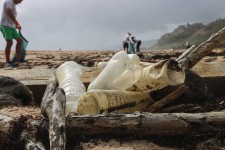
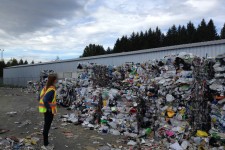 Case study | 2015International Coastal Cleanup ExercisesSince 2015, the EPA has partnered with the Caribbean Youth Environment Network (CYEN) to commemorate the International Coastal Cleanup in Guyana by mobilising hundreds of volunteers to participate in cleanup exercises annually. These exercises are usually concentrated along a portion of the 280-mile seawall and 63 Beach Berbice, both popular tourist attractions. In 2019 over 36,000 pieces of...CountryGuyana
 Case study | 2013Eko RedThe theme of the Eko Red project, a green company, is “The circular economy: reuse, reuse and recycle” given that we are a company focused on the design and operation of a sustainable model that allows us to recycle post-industrial products into the supply chain through a circular economy model that includes recyclers, warehouses and factories; enabling the reduction of environmental impacts and...CountryColombia
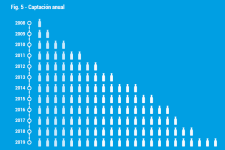 Case study | 2013Sustainable Enterprises Network (RedES) ProgramThe Sustainable Enterprises Network (RedES) drives changes towards sustainable production systems in companies and value chains in order to improve efficiency and competitiveness. Since 2013, RedES has been applied in Cundinamarca, Colombia through the RedES-CAR program. In this program, 550 companies have adopted the circular economy strategies of Cleaner Production and Industrial Symbiosis...CountryColombia
 Case study | 2013Life Cycle Initiative - Global Guidance for Life Cycle Impact Assessment Indicators and Methods (GLAM)The Life Cycle Initiative started GLAM in 2013, in collaboration with University of Michigan, Norwegian University of Science and Technology (NTNU), Denmark’s Technical University (DTU), to enhance global consensus on environmental life cycle impact assessment indicators. The project aims to generate tangible and practical recommendations for different environmental indicators and characterization...CountryEuropean UnionFranceGermanySwitzerland
 Case study | 2013Regional Plan on Marine Litter Management in the MediterraneanWith the Regional Plan on Marine Litter Management in the Mediterranean (the Plan), the UNEP Mediterranean Action Plan (MAP) was the first Regional Seas Programme and Convention to develop legally binding measures to prevent and reduce the adverse effects of marine litter on marine and coastal environments. Adopted in 2013, the entry into force of the Plan coincided with the update of national...CountryAlbaniaAlgeriaBosnia and HerzegovinaCroatiaEuropean UnionFranceGreeceIsraelItalyLebanonLibyaMaltaMonacoMontenegroMoroccoSloveniaSpainTunisiaTurkey
 Case study | 2012Environmentally Acceptable Packaging and ProductsAn ordinance of the City Council of the City of Santa Cruz amending Chapter 6.48 Sections: 6.48.010; 6.48.015, 6.48.020, adding 6.48.027, and amending 6.48.030, 6.48.040 of the Municipal Code pertaining to the ENVIRONMENTALLY ACCEPTABLE PACKAGING AND PRODUCTSCountryUnited States of America
 Case study | 2012Standard for Classification of Biodegradable Plastic Bags 2012This is the standard for classifying biodegradable plastic bags in the Maldives.CountryMaldives
 Case study | 2010Haags Bosch Sanitary Landfill FacilityThe increase in solid waste volumes through an expanding tourism industry and changes in consumption patterns in Guyana has prompted steady improvement in the Haags Bosch Sanitary Landfill Facility (HBSLF). The HBSLF is one of the most modern of its kind in the Caribbean. It is fully operational and uses best practices that includes waste segregation, leachate treatment, waste recovery, monitoring...CountryGuyana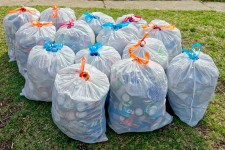
- Single-use plastic products (14)
-
Plastic packaging
(12)
- Polystyrene (5)
- Plastic polymers (7)
-
Primary microplastics
(2)
- Plastic materials and production (20)
- Financing (1)
- Institutional arrangements (6)
- Emissions and releases (24)