Displaying 181 - 190 of 227507

Using Local Beach Management Units in Tanzania

Submitted by Anonymous (not verified) on

With support from the World Bank, the Tanzanian government created local beach management units to improve local fisheries management. The project’s goal was to stop detrimental fishing practices, such as using poison or dynamite, by increasing community involvement in surveillance and management of the fisheries. The local beach management unit members were not deputized or given legal powers, but identified suspects to enforcement agencies. According to local fishery managers, these efforts have reduced illegal fishing practices such as using poison and dynamite. Studies also suggest that some local fisheries have improved. Researchers posit that this may be attributable to fisherfolk learning from each other through the local beach management unit process.a Thus, coordination with local communities can simultaneously improve enforcement and resource outcomes.

Country
United Republic of Tanzania

Waste Management at Bucuti and Tara Beach Resort, Aruba

Submitted by woodkf@hotmail.com on

Bucuti and Tara Beach Resort is the Caribbean’s first and only certified carbon-neutral hotel. Located on the small island of Aruba, today, the property is pursuing carbon negative status. Since its inception, Bucuti and Tara Beach Resort (Bucuti & Tara) has had a high standard and placed the utmost importance on sustainability and care for the environment. This shows true until today; most notably within the resort’s extensive sustainability program which also entails waste management. The resort’s waste management approach extends from items such as single use plastics, to cardboard and food waste. The program has enabled the resort to successfully divert over 60% of its waste from landfills on a continuous basis. In the following pages you will learn about the different strategies Bucuti and Tara has employed to manage waste.

Introduction to Bucuti and Tara Beach Resort

Bucuti and Tara Beach Resort is a boutique resort, located on Eagle Beach in Oranjestad, Aruba. With an unwavering commitment to sustainability and community awareness, the resort continuously strives to find creative solutions. Aruba is driven by tourism and tourists, many of whom visit the island to enjoy the sea, sun, sand and thus predominantly our nature. For this reason, Mr. Ewald Biemans, owner and CEO of the resort, often says, “tourism is not the pillar of our economy, nature is – because without nature we would have no tourists”. When Mr. Biemans opened the resort, he had a vision to have a sustainable resort, and today the resort has a comprehensive sustainability program. As a result, Bucuti and Tara has been recognized by leading sustainability and environmental organizations and has succeeded in winning many prestigious awards for sustainability. To support its dedication to environmental preservation in operations and the community, Bucuti & Tara was named the most sustainable resort in the world by Green Globe Certification (Green Globe, 2016) - a global third party sustainability program for travel, tourism and business operations.

Waste Management

The success of Bucuti and Tara’s waste management are the several methods employed to reduce waste and divert as much as possible from the landfill. This is accomplished essentially through the basic steps of reducing, reusing and recycling wherever possible. Another important factor is forward planning and purchasing. Looking at the make-up of waste streams and conducting audits to understand what you are producing and bringing in through your purchasing is critical to managing and reducing the waste inputs within your operations. Measuring and reporting on a consistent and correct basis enhances the program and procedures, along with training and awareness amongst staff and basic information to guests, serves to increase performance. The resort manages all waste from cardboard to food waste. Here are the methods used:

  • Purchasing in bulk. This works by reducing waste resulting from portion-controlled bottles. For example: Bucuti & Tara employs a dispenser system for toiletries that are refilled instead of purchasing countless tiny bottles that will be discarded.
  • No single-use plastics or Styrofoam.
  • In the employee cafeteria jam jars from the restaurant are used as drinking cups and all plates and cutlery come from the restaurant as its dishware is replaced.
  • All drinks from the bar are served in either glass or reusable hard plastic at the beach with beach attendants collecting them after each use.
  • Recycle bins are located in rooms and throughout the resort for guest use with signage.
  • UPS batteries are recycled.
  • The resort gives all guests a Bucuti-branded reusable insulated canteen and provides water stations throughout the resort.
  • Cardboard is recycled with a local waste management company or reused throughout the property for signage.
  • Glass is recycled with a local waste management company.
  • Kitchen oil is picked up by a company that turns this into biodiesel.
  • Food waste is picked up by a local farmer to use as pig feed.
  • Food portions have also been reduced in order to minimize food waste.
  • Food waste training. In a partnership with WWF, the resort recently conducted a training with staff on the environmental and financial implications of food waste and how to minimize waste (utilizing tools on hotelkitchen.org). This training resulted in a 30% reduction in food wasted before and during service to guests and the resort gives constant training to staff on how to minimize waste (utilizing tools on hotelkitchen.org) and explains what these types of waste represent, environmentally.
  • Washable food covers are in place to reduce plastic wrap as food covering.
  • Minimal packaging or container/crate take back policies are in place with suppliers (where possible) for packaging and refillable products to reduce unnecessary waste entering the resort.
  • Linens are repurposed to laundry bags for guest use or donated to local foundations.
  • Towels are repurposed to towels for the fitness center or donated to local foundations.
  • During renovations, all furniture, fixtures, and appliances are sold or donated to local foundations. Garden waste is mulched to be reused as fertilizer.
  • Many checklists converted to digital checklist to minimize paper waste. As the resort pursues carbon negativity status, one of its next goals is to become 100% paperless, thus eliminating paper waste.

Source: United Nations Environment Programme (2021). Compendium of case studies on solid waste management.


 
Photo by David Troeger on Unsplash
Date
Geographical coverage
Sub-national
Implementing body
Civil society organization
Regulatory Approach
Combined actions

Regional #CleanSeas Campaign

Submitted by woodkf@hotmail.com on
Photo by Brian Yurasits on Unsplash
Date
Country
Barbados
Grenada
Saint Kitts and Nevis
Saint Vincent and the Grenadines
Trinidad and Tobago
Geographical coverage
Regional
Regulatory Approach
Other actions

National Plan for the Sustainable Management of Single-Use Plastics

Submitted by woodkf@hotmail.com on

In 2018, Colombia formed the National Board for the Sustainable Management of Plastic, with government entities, private sector, academia, recyclers, NGOs and research institutions; within this context, the National Plan for the Sustainable Management of Single-Use Plastics, which included “lines of action per product” directed towards improving the environmental characteristics of plastic products, the rational use of plastics, the culture in commercial establishments. It includes cross-cutting actions in research, reverse logistics, communications and citizen culture and resource management, among others, which are already being implemented. 

Colombia makes progress towards the sustainable management of single-use plastics

Plastics are currently one of the most widely used materials to manufacture and wrap many of the products that we buy and consume in our daily lives. The National Administrative Department of Statistics (DANE) recorded that in 2017 the production of plastic bags, which include branded and unbranded plastic bags and those that are vacuum packed, exceeded 60 thousand tons.

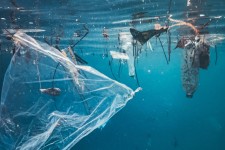
Plastic is used because it is easy and cheap to manufacture, and because it lasts a long time. Unfortunately, these same advantages have converted it into the number one contributor to pollution after the consumption of products, due to the lack of recycling systems and the lack of knowledge and culture among citizens on how to separate it. Studies show that marine litter directly affects living organisms, especially through entanglement with macroplastics and ingestion of microplastics (Neufeld, et al., 2016), and considering that many plastic products are used for just a few minutes or even a few seconds and then discarded. 

The National Board for the Sustainable Management of Plastic

The Government created the above mentioned National Board for the Sustainable Management of Plastic in 2018, with the participation of the public and private sector to articulate and execute actions in all phases of the plastic life cycle for the improvement of environmental, economic and social sustainability, to achieve efficiency in the use of materials, under the principles of the circular economy.

The Board is a platform that brings together key actors from the public and private sectors, academia, recyclers, NGOs and research institutions and has enabled the formulation of the Plan for the Sustainable Management of Single-use Plastics, with actions that are aimed at the gradual replacement of some singleuse products that are considered harmless, such as mixers, cigarettes, bags and cups, and promoting a culture of using reusable products. It also establishes incentives for the reverse management of waste through measures such as the extended producer responsibility and promoting eco-designing which consists of incorporating environmental features such as the possibility of reuse, recyclability and compostability, among others, into production.

The plan presents the background on the problem and the international commitments established by the United Nations Environment Assembly, the Pacific Alliance, Colombia’s progress and commitments, to contribute to solving the problem of ocean pollution caused by the inadequate management of plastics, as the foundations to establish a vision in which Colombia manages plastics in a sustainable way by 2030. In the first instance the Plan establishes “lines of action per product” with initiatives aimed at improving the environmental characteristics of plastic products, to promote the rational use of single-use plastics, adding reusable materials to the market and changing the culture in commercial establishments and residential services.

The Plan also includes cross-cutting actions that are fundamental to facilitate management, highlighting labelling, ecodesign, communication and culture towards sustainable living, sustainable public purchases, coordinating public sanitation services, as well as restrictions for the use of plastic in protected areas. Likewise, actions are included that address basic and applied research for new substitute materials and the creation of reverse logistics mechanisms. The complementarity and harmony established for the development of the proposed actions facilitate the fulfillment of the objectives and goals.

Likewise, it promotes the implementation of the principle of extended producer responsibility – EPR for waste containers and packaging, including those made from plastic, as established in Colombian regulations, according to which producers must formulate, implement and keep updated their environmental management plans for waste containers and packaging. In addition, there is a need to broaden the extended producer responsibility to single plastic products, different from containers and packaging, the management of resources and the strengthening of the information systems.

Likewise, it develops mechanisms to promote change towards sustainable living in such a way that the consumer incorporates environmental criteria into purchases for goods and services.

Medium term goals for the replacement of single-use plastic products are established in the plan and the use of plastics by at least 50% by the year 3030.

In this way, the 9R hierarchy, of the National Circular Economy Strategy: Discard, Rethink, Reduce, Reuse, Repair, Restore, Remanufacture, Re-propose, Recycle and Recover will be applied to single-use plastic products.

[NB see the 2021 National Plan for the Sustainable Management of Single-Use Plastics here.]

Source: United Nations Environment Programme (2021). Compendium of case studies on solid waste management.

Date
Country
Colombia
Geographical coverage
National
Implementing body
Government
Regulatory Approach
Combined actions

Pasay City: Resolution No. 4873

Submitted by woodkf@hotmail.com on
Date
Country
Philippines
Geographical coverage
Sub-national
Implementing body
Government
Regulatory Approach
Bans and restrictions
View document