Filter by:
Law and Plastics Taxonomy
-
Compliance and enforcement
(1)
- Emissions and releases (24)
- Impacts (7)
- Littering (8)
-
Marine litter
(9)
- Institutional arrangements (6)
-
Coordination
(4)
- Financing (1)
- Integration and mainstreaming (4)
- Public participation (5)
- Plastic materials and production (20)
-
Microplastics
(3)
-
Primary microplastics
(2)
- Plastic polymers (7)
-
Synthetic polymers
(7)
- Polyethylene terephthalate (4)
-
Polyolefins
(1)
- Polystyrene (5)
- Plastics (19)
- Policy approaches (15)
- Circular economy (9)
-
Economic instruments
(5)
- Fines (2)
-
Taxes
(3)
- Extended Producer Responsibility (3)
- Life-cycle approach (2)
- Product bans (2)
- Problematic and avoidable plastic products (16)
-
Short-lived plastic products
(16)
-
Plastic packaging
(12)
- Plastic carrier bags (11)
-
Plastic containers
(2)
- Single-use plastic products (14)
- Product design, composition and performance (3)
-
Product design and performance
(3)
-
Labelling
(3)
- Waste management (23)
-
Dumping
(4)
- Fishing gear (2)
- Waste (22)
- Domestic waste (2)
- Dumpsites (1)
-
Hazardous waste
(3)
- Waste collection (3)
- Waste disposal (2)
- Waste management facilities (1)
- Waste management plans (1)
- Waste minimization (8)
- Waste prevention (1)
- Waste treatment and processing (17)
Showing 21 - 27 of 27 resultsCase study | 2013Sustainable Enterprises Network (RedES) ProgramThe Sustainable Enterprises Network (RedES) drives changes towards sustainable production systems in companies and value chains in order to improve efficiency and competitiveness. Since 2013, RedES has been applied in Cundinamarca, Colombia through the RedES-CAR program. In this program, 550 companies have adopted the circular economy strategies of Cleaner Production and Industrial Symbiosis...CountryColombia Case study | 2010Haags Bosch Sanitary Landfill FacilityThe increase in solid waste volumes through an expanding tourism industry and changes in consumption patterns in Guyana has prompted steady improvement in the Haags Bosch Sanitary Landfill Facility (HBSLF). The HBSLF is one of the most modern of its kind in the Caribbean. It is fully operational and uses best practices that includes waste segregation, leachate treatment, waste recovery, monitoring...CountryGuyana
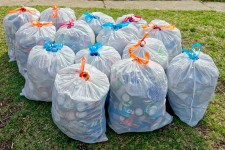 Case study | 2001Waigani Convention - South PacificThe Secretariat of the Pacific Regional Environmental Programme (SPREP) is the Pacific Regional Centre for the Joint Implementation of the Basel and Waigani Conventions. The objective of the Waigani Convention, adopted in 2001, is to reduce and eliminate transboundary movements of hazardous and radioactive wastes, minimize the production of hazardous and toxic wastes in the Pacific region, and...
 Case studyRegional Action Plan for Marine Litter (RAPMaLi) for the Wider Caribbean RegionThe Regional Action Plan for Marine Litter (RAPMaLi) for the Wider Caribbean Region was originally developed in 2007 to promote problem solving at the national and local levels, recognizing that unique regional characteristics should inform innovative solutions to the problem of marine litter. The RAPMaLi action plan has since been implemented through selected pilot projects in Guyana, Barbados...CountryBarbadosGuyanaSaint Lucia
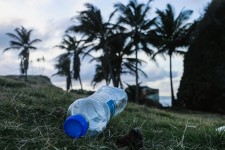 Case studyAfrica Region – Plastic Pollution and Marine Litter Law and PolicyAfrica, the second largest continent in the world, is experiencing a higher urban population growth (estimated at 3.5% per year) than any other continent, with a steep rise in the middle class and the associated increase of municipal solid waste from 0.78kg per capita per day to 0.99kg by 2025. When coupled with various waste management challenges, there is an expected increase in mismanaged waste...CountryBotswanaGambiaGhanaKenyaMalawiMauritiusRwandaSeychellesSouth AfricaUgandaUnited Republic of TanzaniaZambiaZimbabwe
 Case studyEuropean Union - Legal FrameworksThe European Union has set in motion various initiatives to combat plastic waste and pollution.CountryEuropean Union
 Case studyNavarra region SUP ban, reusable targets for HORECA sectorSince 2018, a regional law in Navarra requires businesses in the hotel, retail and catering (HORECA) sector to serve 80% of beer, 70% of soft drinks and 40% of water in reusable containers, by 2028. By the same deadline, 15% of beverage containers sold in shops must be reusable. Source: Rethink Plastic Alliance (2022). Single Use Plastics Directive Implementation Assessment Report.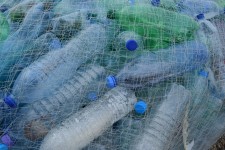
- Waste management (23)
-
Labelling
(3)
- Single-use plastic products (14)
-
Plastic packaging
(12)
- Polystyrene (5)
- Plastic polymers (7)
-
Primary microplastics
(2)
- Financing (1)
- Institutional arrangements (6)
- Emissions and releases (24)