Filter by:
Law and Plastics Taxonomy
-
Compliance and enforcement
(1)
- Emissions and releases (24)
- Impacts (7)
- Littering (8)
-
Marine litter
(9)
- Institutional arrangements (6)
-
Coordination
(4)
- Financing (1)
- Integration and mainstreaming (4)
- Public participation (5)
- Plastic materials and production (20)
-
Microplastics
(3)
-
Primary microplastics
(2)
- Plastic polymers (7)
-
Synthetic polymers
(7)
- Polyethylene terephthalate (4)
-
Polyolefins
(1)
- Polystyrene (5)
- Plastics (19)
- Policy approaches (15)
- Circular economy (9)
-
Economic instruments
(5)
- Fines (2)
-
Taxes
(3)
- Extended Producer Responsibility (3)
- Life-cycle approach (2)
- Product bans (2)
- Problematic and avoidable plastic products (16)
-
Short-lived plastic products
(16)
-
Plastic packaging
(12)
- Plastic carrier bags (11)
-
Plastic containers
(2)
- Single-use plastic products (14)
- Product design, composition and performance (3)
-
Product design and performance
(3)
-
Labelling
(3)
- Waste management (23)
-
Dumping
(4)
- Fishing gear (2)
- Waste (22)
- Domestic waste (2)
- Dumpsites (1)
-
Hazardous waste
(3)
- Waste collection (3)
- Waste disposal (2)
- Waste management facilities (1)
- Waste management plans (1)
- Waste minimization (8)
- Waste prevention (1)
- Waste treatment and processing (17)
Showing 21 - 30 of 73 resultsCase study | 2021Marine Strategy for the Dutch part of the North Sea 2012-2020The Marine Strategy for the Dutch Part of the North Sea 2012-2020 (Part 3) encompasses the programme of measures for a healthy sea with sustainable use. The European Marine Strategy Framework Directive (MSFD) obliges EU member states to develop a strategy to achieve and/or maintain a good environmental status in their part of the sea (i.e. the Dutch part of the North Sea for the Netherlands) by...CountryNetherlands Case study | 2020National Waste Management Strategy 2020The NWMS provides a coherent framework and strategy for the implementation of the Waste Act and outlines government’s policy and strategic approach to waste management within the South African government’s context and agenda of socio-economic development that is “equitable, inclusive, sustainable and environmentally sound”.CountrySouth Africa
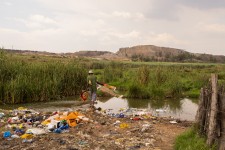 Case study | 2020Waste Picker Integration Guideline for South AfricaThe second National Waste Management Strategy (NWMS) (DEA, 2011: 27) commits government to “provide guidance to municipalities and industry on measures to improve the working conditions of waste-pickers”. Government has undertaken a number of activities to fulfil this mandate.CountrySouth Africa
 Case study | 2020Chemicals Strategy for Sustainability Towards a Toxic-Free EnvironmentChemicals are essential for the well-being, high living standards and comfort of modern society. They are used in many sectors, including health, energy, mobility and housing. However, most chemicals have hazardous properties which can harm the environment and human health. The EU already has sophisticated chemicals laws in place, but global chemicals production is expected to double by 2030. The...CountryEuropean Union
 Case study | 2019Balearic Islands SUP ban, reusable targets for HORECA sectorIn 2019, the Balearic Islands set similar requirements to Navarra: for the Horeca sector reuse targets of 40% have been set for bottled water, of 80% for beer packaging, of 70% for soft drinks, and for other sectors a general target of 15% has been set. Source: Rethink Plastic Alliance (2022). Single Use Plastics Directive Implementation Assessment Report.CountrySpain
 Case study | 2019Regional #CleanSeas CampaignIn 2019, a Regional Clean Seas Campaign was launched for the WCR with support from the Global Partnership for Marine Litter Management (GPML). Through the campaign, capacity-building support was provided to various stakeholders on outreach, advocacy, resource mobilization and development of new project proposals for reducing marine litter and plastics. The Caribbean #CleanSeas Campaign was...CountryBarbadosGrenadaSaint Kitts and NevisSaint Vincent and the GrenadinesTrinidad and Tobago
 Case study | 2019Abolishing import duties on sustainable alternatives in Saint LuciaThe Government of Saint Lucia banned styrofoam and selected single-use plastic foodservice containers in 2019. One of the key challenges was the unavailability of better and cheap alternatives. To reduce the burden on consumers the Government decided to abolish import duties on sustainable alternatives foregoing 5–20 per cent of revenue. Source: United Nations Environment Programme (2023). Turning...CountrySaint Lucia
 Case study | 2019Rethinking plastics in Aotearoa New ZealandNew Zealand: Rethinking Plastics (2019) suggests using life cycle thinking to provide insights and uncover trade-offs when considering alternative materials to plastics. The report recommends that any introduction of new plastics or alternative materials needs to be guided from a system/life cycle perspective. When introducing a new material to replace problematic plastics, questions to address...
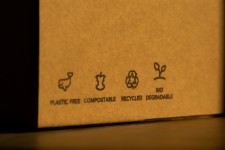 Case study | 2019National Plan for the Sustainable Management of Single-Use PlasticsIn 2018, Colombia formed the National Board for the Sustainable Management of Plastic, with government entities, private sector, academia, recyclers, NGOs and research institutions; within this context, the National Plan for the Sustainable Management of Single-Use Plastics, which included “lines of action per product” directed towards improving the environmental characteristics of plastic...CountryColombia
 Case study | 2019The 2019 Waste Segregation MovementIn September 2019, the Indonesian Ministry of Environment and Forestry launched the “Waste Sorting Movement (Gerakan Pilah Sampah)” to encourage more source separation and promote circular economy. Source: Ministry of Environment and Forestry (2020): National Plastic Waste Reduction Strategic Actions for Indonesia, Republic of IndonesiaCountryIndonesia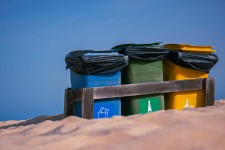
- Waste management (23)
-
Labelling
(3)
- Single-use plastic products (14)
-
Plastic packaging
(12)
- Polystyrene (5)
- Plastic polymers (7)
-
Primary microplastics
(2)
- Financing (1)
- Institutional arrangements (6)
- Emissions and releases (24)